
"The family becomes a caregiver just by default."
Sarah Shao on the FSHD origin story, the limits of the binary accessibility checkbox, and how the 0–100 score gives families the confidence to plan a meal out together.
Read the interview
Everyone in the disability community deserves to know, with certainty, whether they can access a place before they leave home. ROLLIN makes that possible — for restaurants, hotels, parks, museums, and outdoor spaces alike.
ROLLIN founder David Sirota joined Wreaths Across America Radio to talk about why accessibility data has been broken for decades, why his father's FSHD diagnosis was the catalyst, and how ROLLIN is using accessibility intelligence to give the disability community — including disabled veterans — the dignity of knowing before they go.
"Accessibility is what we do, what we need, and what we breathe. ROLLIN is what we built so the data can be trusted."
David Sirota · founder, ROLLIN
 May 30, 2026 · 4:50
 "Restaurants say their space is accessible — and we all know that's often not the case. Enter ROLLIN, a new app providing detailed information about and ratings of the accessibility of local restaurants."
— Also in the press
Sarah Shao on the FSHD origin story, the limits of the binary accessibility checkbox, and how the 0–100 score gives families the confidence to plan a meal out together.
Read the interviewGoogle Maps has an accessibility checkbox. It’s binary, often wrong, and tells you nothing useful.
A wheelchair user drives forty minutes to a restaurant marked “accessible.” There are three steps at the entrance. No ramp. The host offers to carry him in. That checkbox was clicked in 2019 and never verified.
David Sirota’s father has FSHD — facioscapulohumeral muscular dystrophy. Every dinner out starts with a phone call: Is there a step? Can a chair fit between tables? What about the restroom? That phone call is the product of a data gap that the entire tech industry ignored.
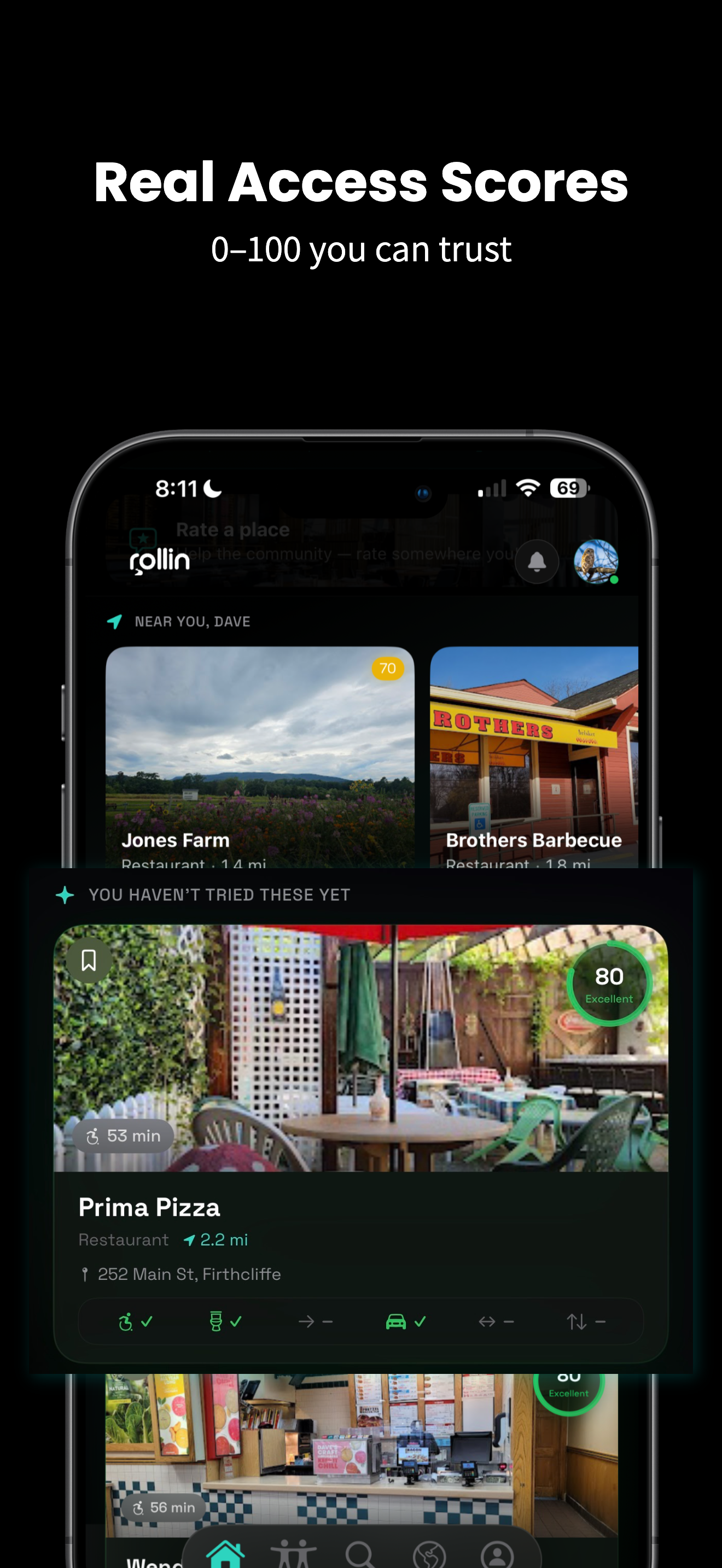
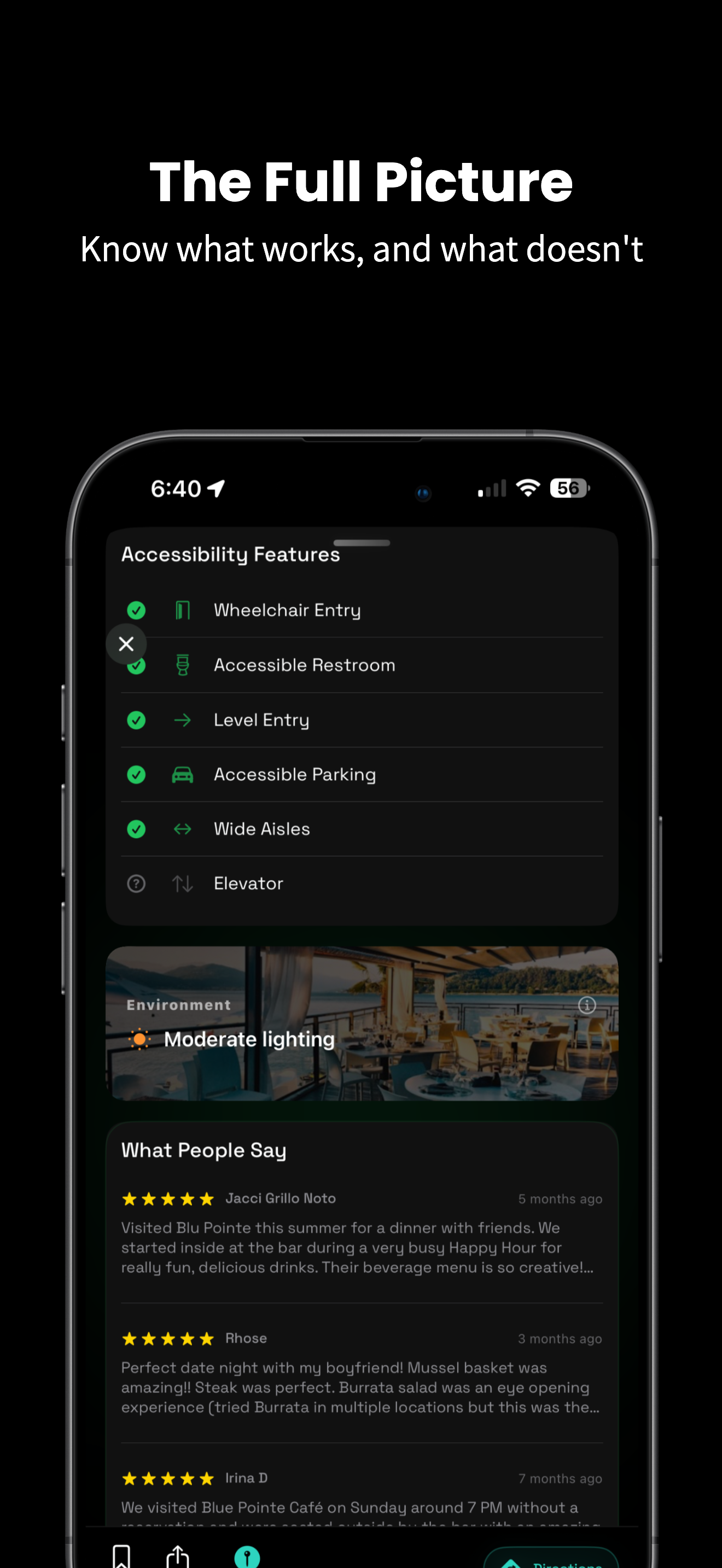
ROLLIN replaces that guesswork with data. A 0–100 accessibility score for every venue, built on six physical features, verified by a trust-weighted community of people with access needs, caregivers, and allies. The steps, the aisles, the restrooms — you see them before you leave home.
ROLLIN’s accessibility data powers multiple surfaces from a single scored dataset. A REST API with six endpoints serves scored data to any application. An MCP server on npm lets AI assistants like Claude, Cursor, and VS Code query natively. A Python SDK auto-generated by Stainless wraps the API. And embeddable widgets let businesses display their verified score on their own websites.
Search restaurants, hotels, parks, museums, and outdoor spaces by accessibility features. See real scores. Know before you go.
joinrollin.com/app →REST API, Python SDK, and an MCP server for AI assistants. Structured scores, features, and confidence levels in JSON.
joinrollin.com/api →Embeddable widgets for your website. Show guests exactly what to expect — backed by real data, not self-reported claims.
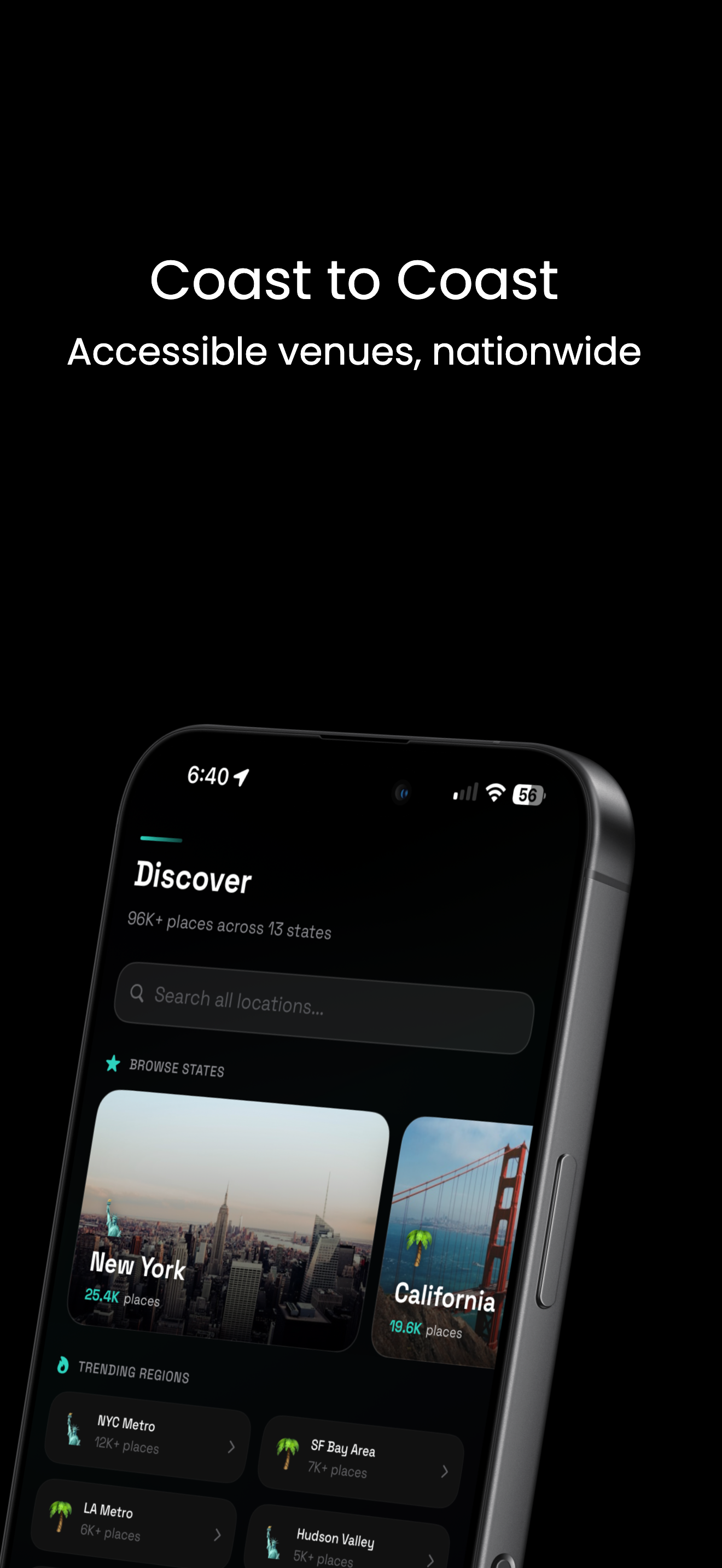
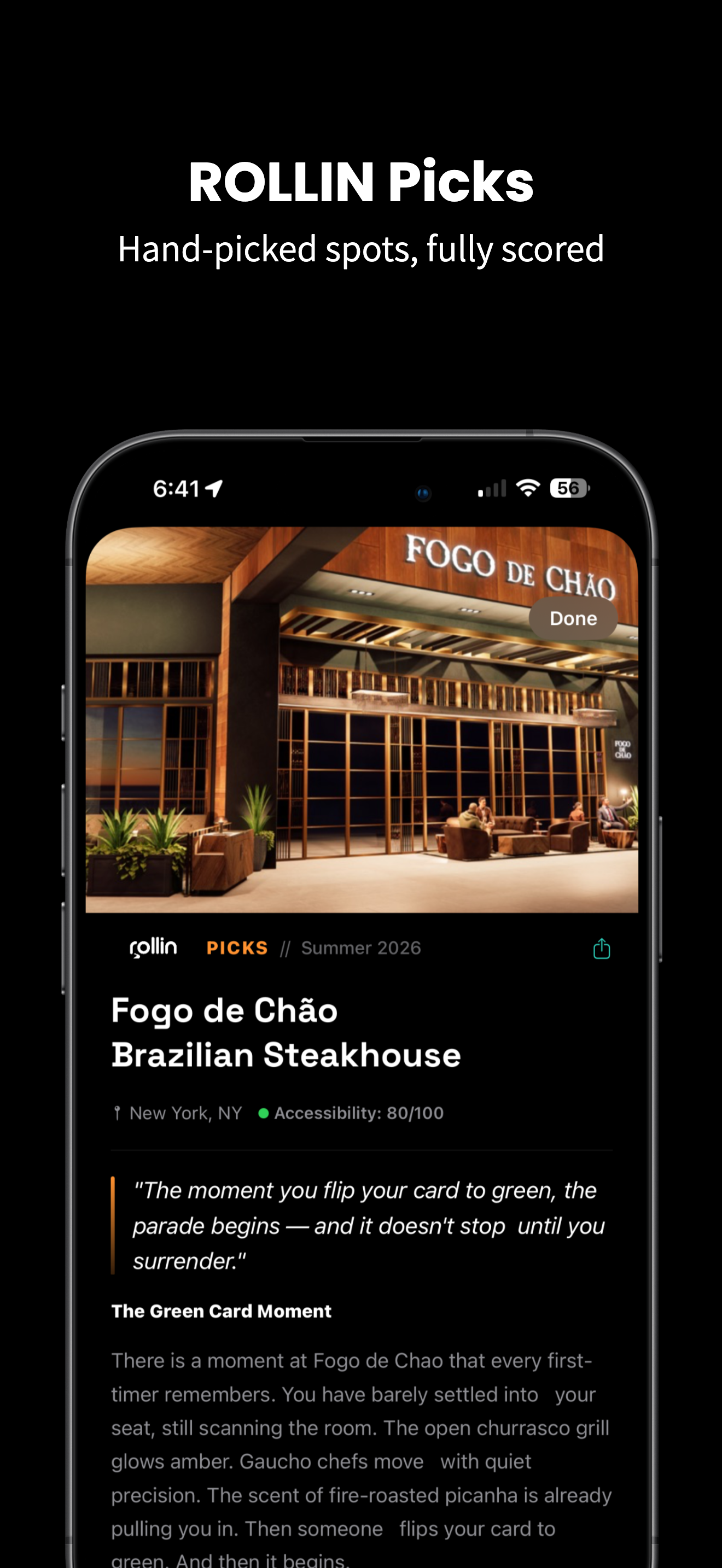
joinrollin.com/embed →High-resolution product screenshots for editorial use. Right-click to save or contact us for custom assets.
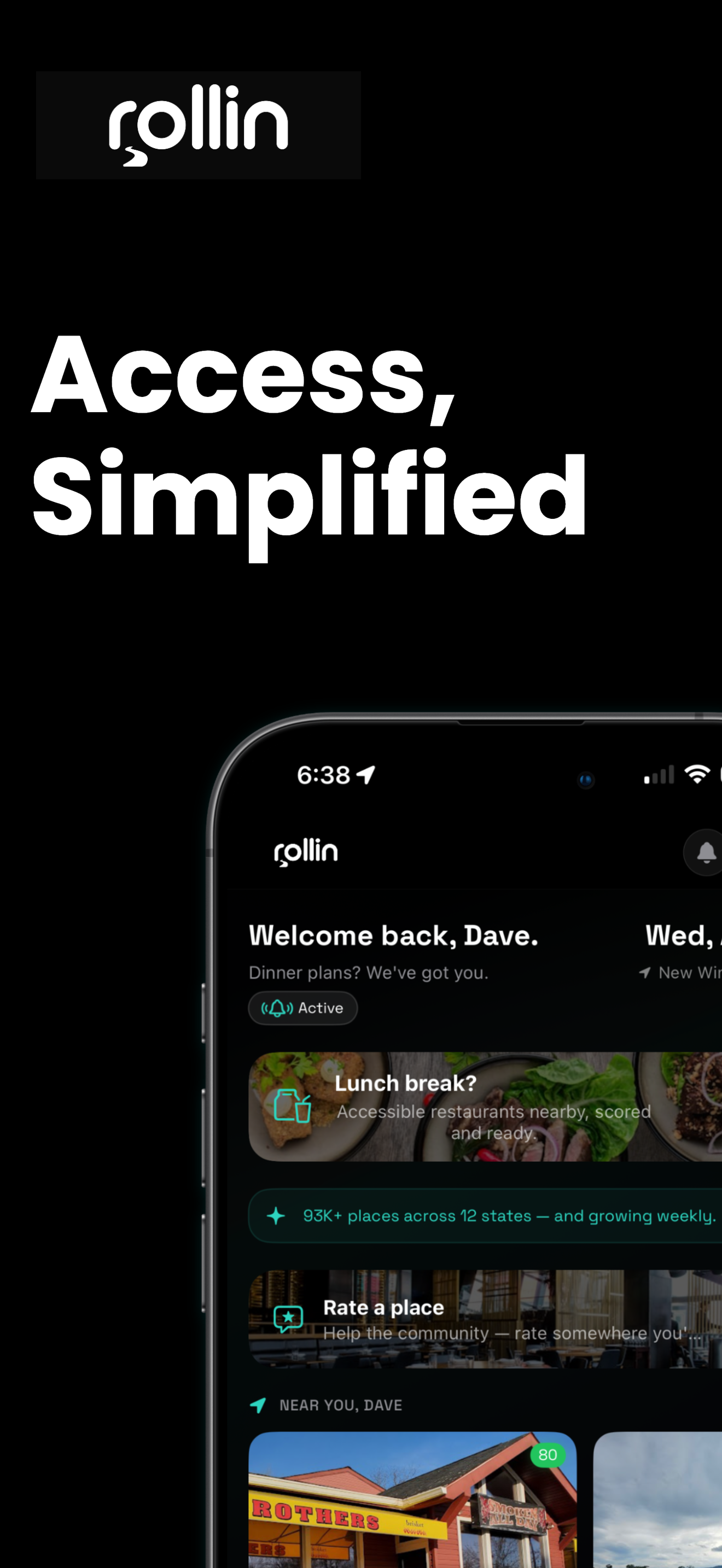
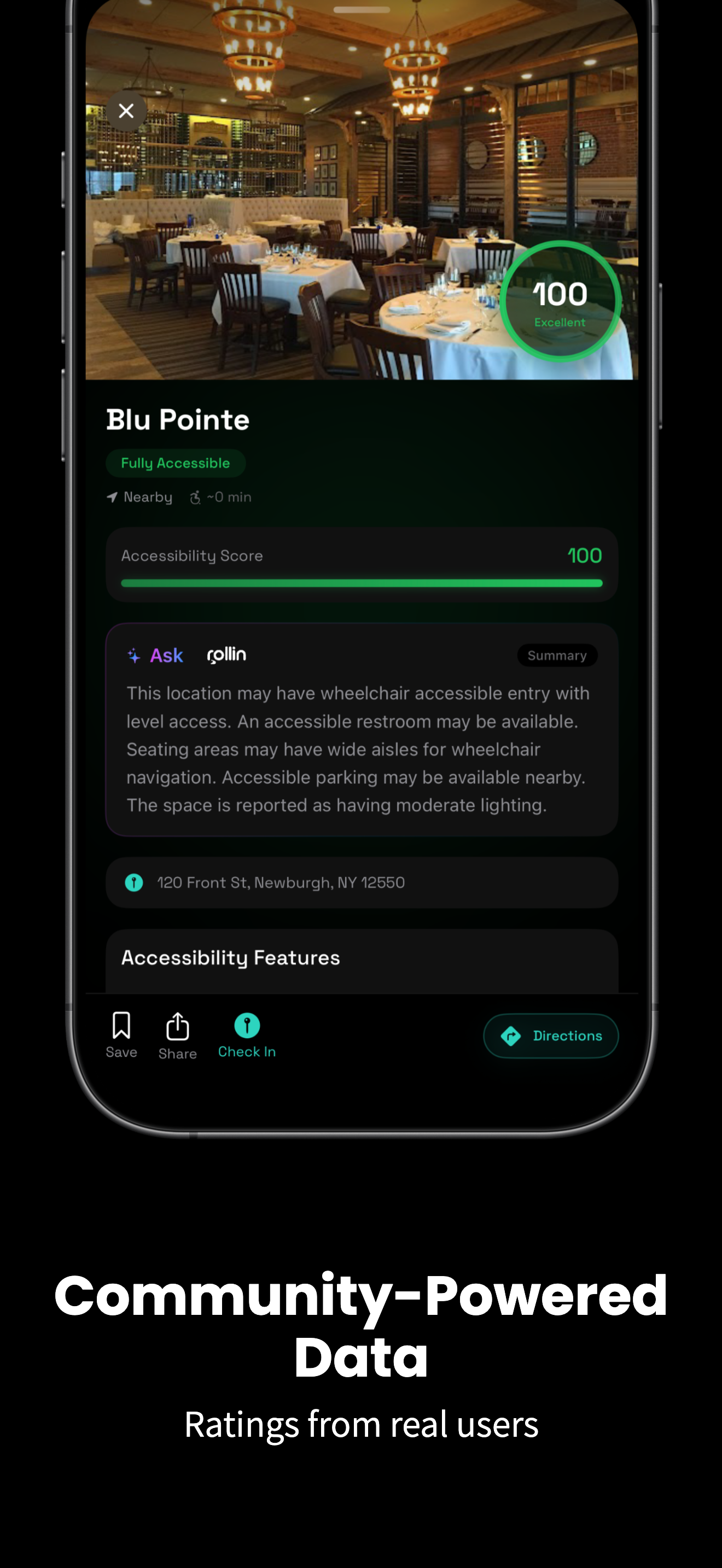
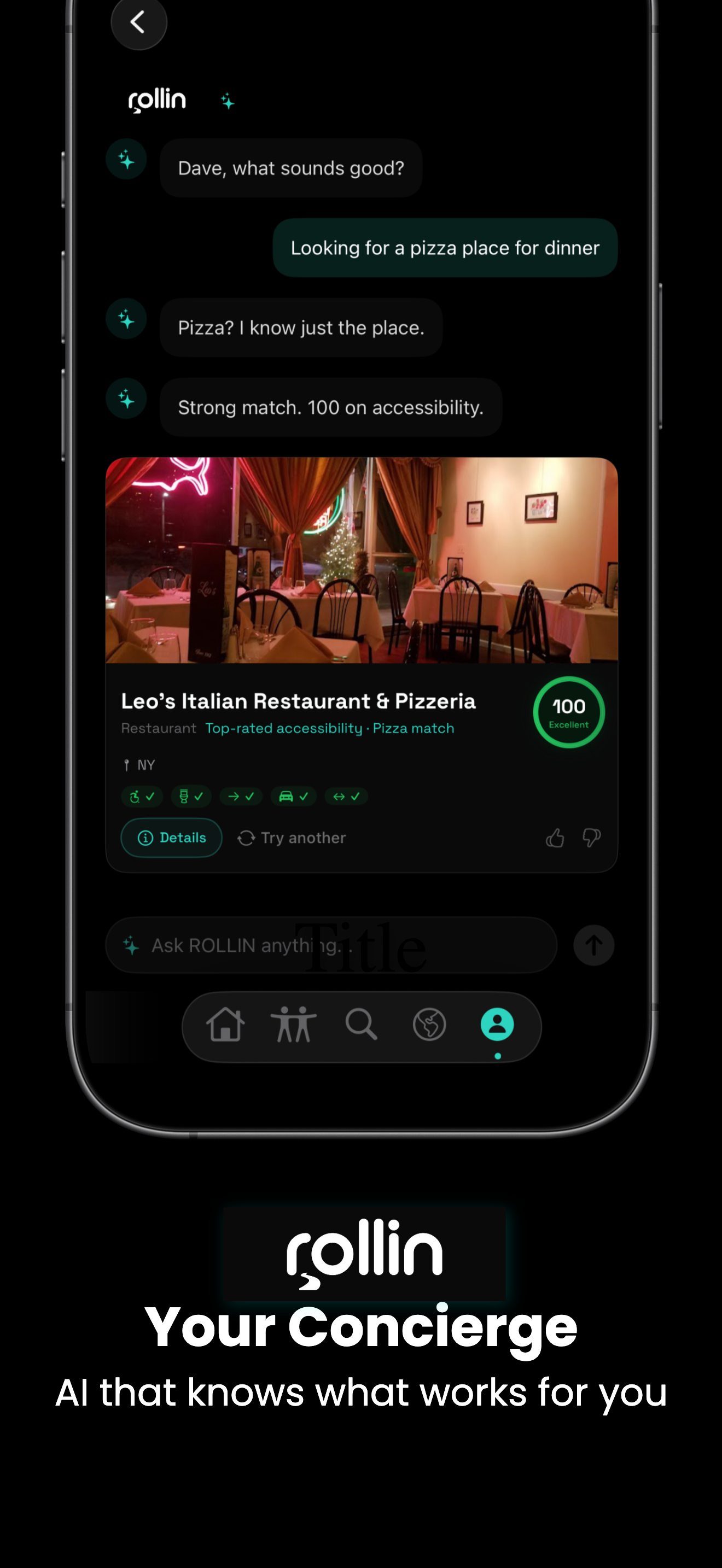
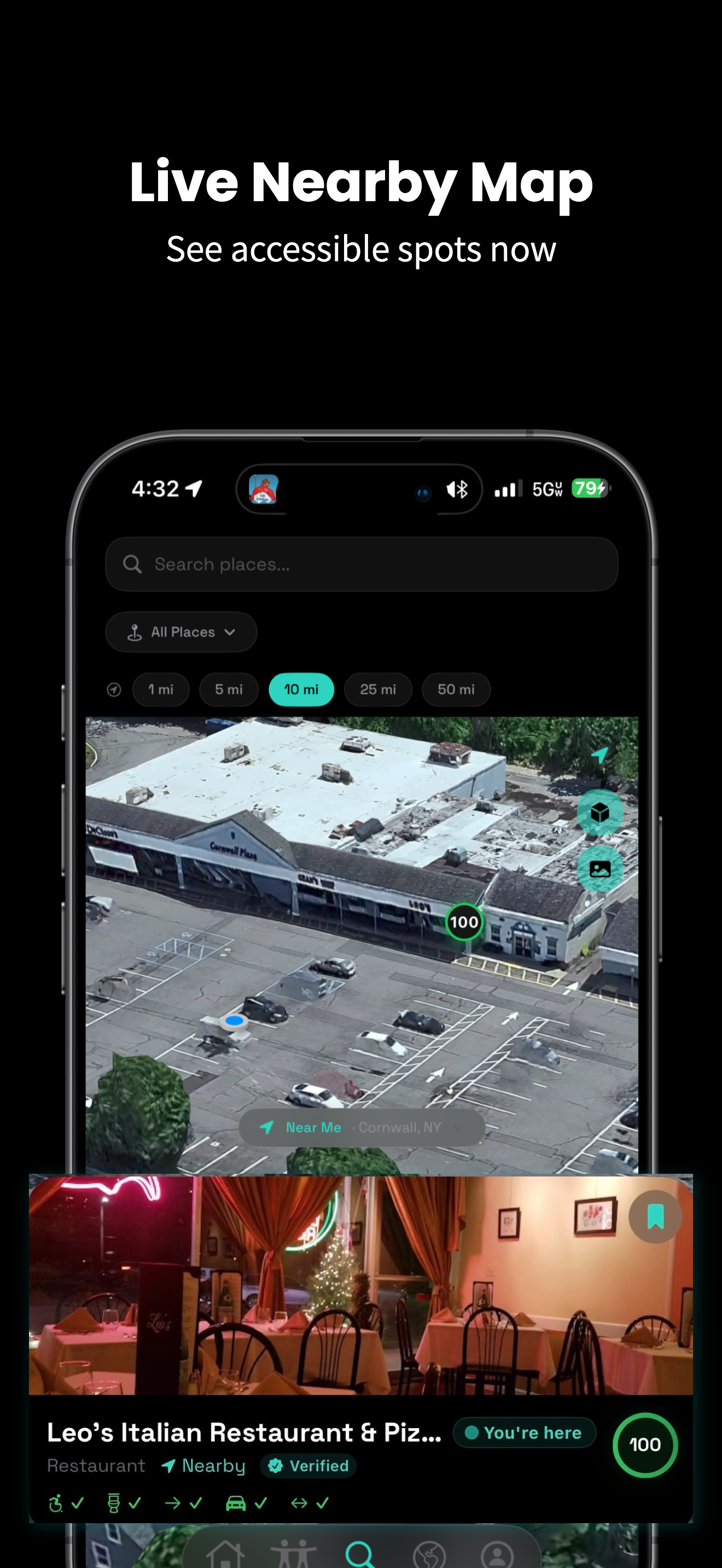
Use on dark backgrounds whenever possible. Do not modify, rotate, or recolor the ROLLIN logo.



ROLLIN scores restaurants, hotels, parks, museums, and outdoor spaces on a 0-100 accessibility scale. Built for wheelchair users, walker and cane users, families with strollers, people with sensory needs, and the people who go places with them.
Every place has an accessibility story. Most of them end at the front door. ROLLIN was built by David Sirota, whose father has FSHD muscular dystrophy, after too many dinners that started with a phone call and ended with steps and no ramp. The platform scores 105,000+ locations across the United States — restaurants, bars, hotels, museums, theaters, parks, gardens, beaches, trails, and outdoor venues — on six physical accessibility features: wheelchair entry, accessible restroom, level entry, wide aisles, accessible parking, and elevator access. Verified by a trust-weighted community of people with access needs, caregivers, and allies. Available as an iOS app (ROLLIN Concierge, Free), a free web platform, a REST API, an MCP server for AI assistants, a Python SDK, and embeddable widgets for businesses.

Built ROLLIN because his father has FSHD muscular dystrophy and every dinner out shouldn’t require a phone call.